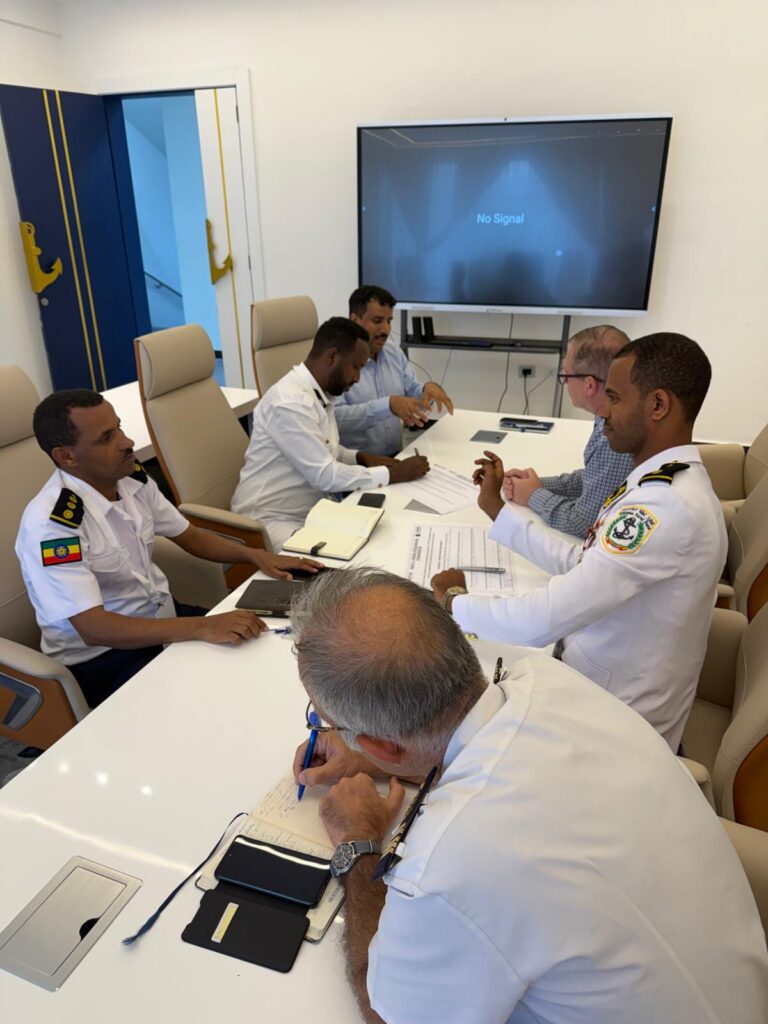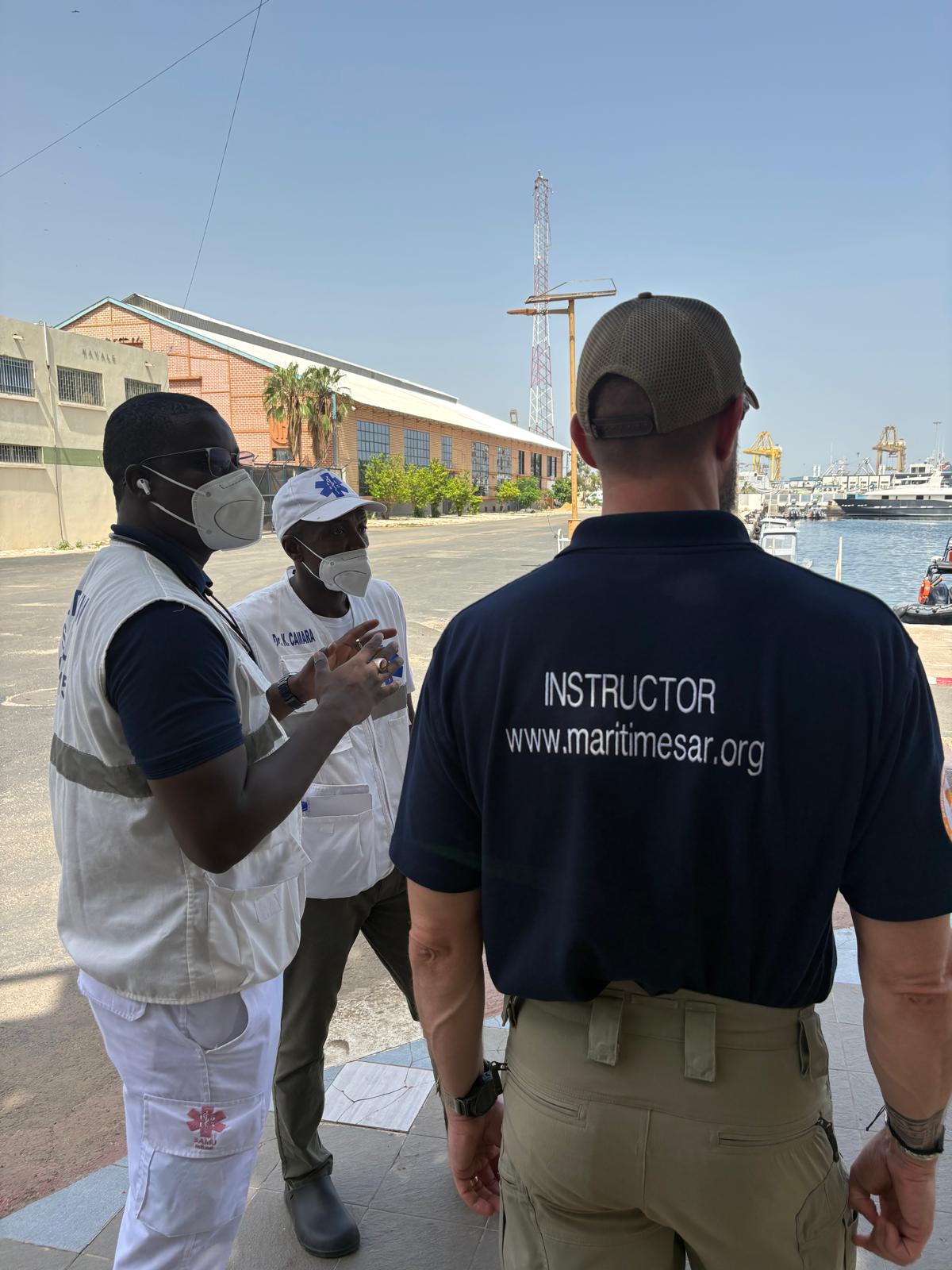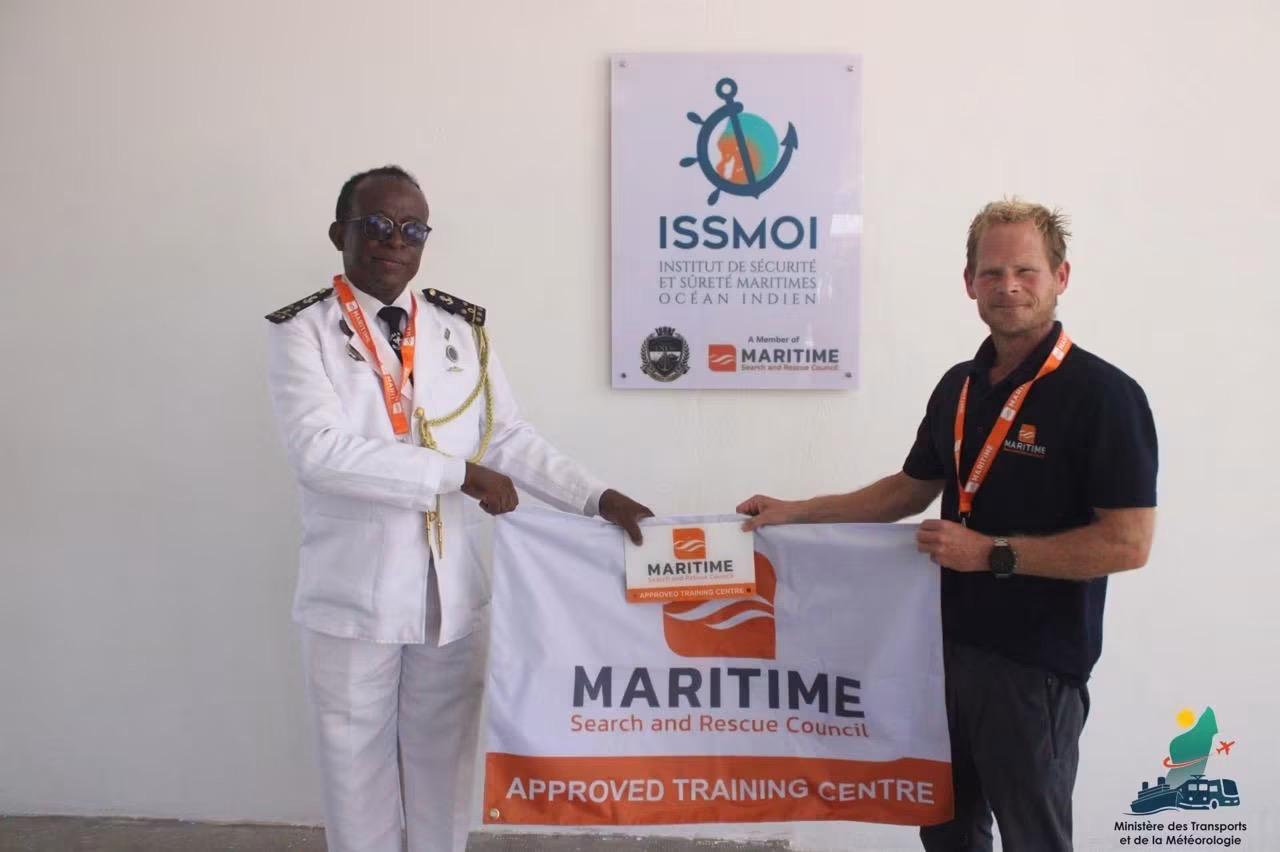
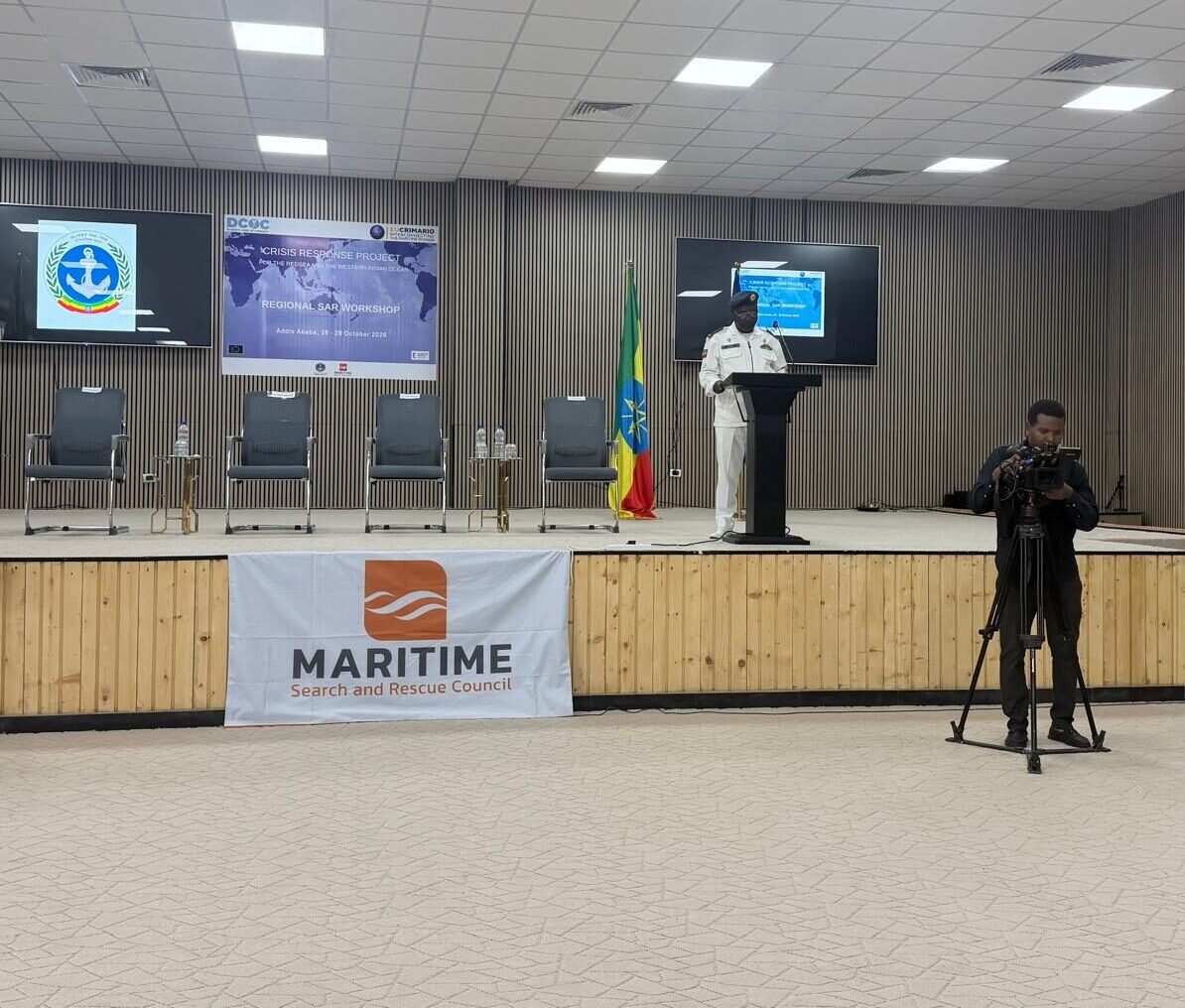
The Maritime Search and Rescue Council (MSARC), in collaboration with the EU’s Crisis Response Project, has supported the delivery of a four-day Regional Maritime Search and Rescue Workshop in Addis Ababa, Ethiopia, bringing together regional partners to strengthen cooperation and preparedness for saving lives at sea.
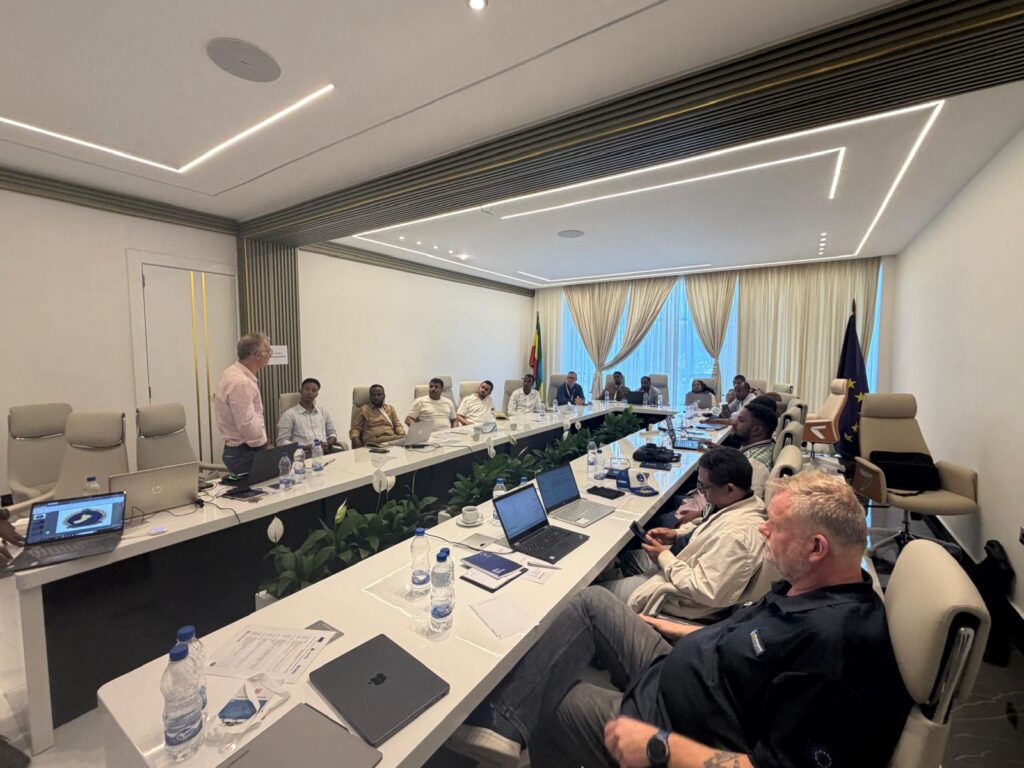
Representatives from regional authorities came together to exchange operational experience, explore national and regional SAR arrangements, and consider practical approaches to coordinating responses across the region.
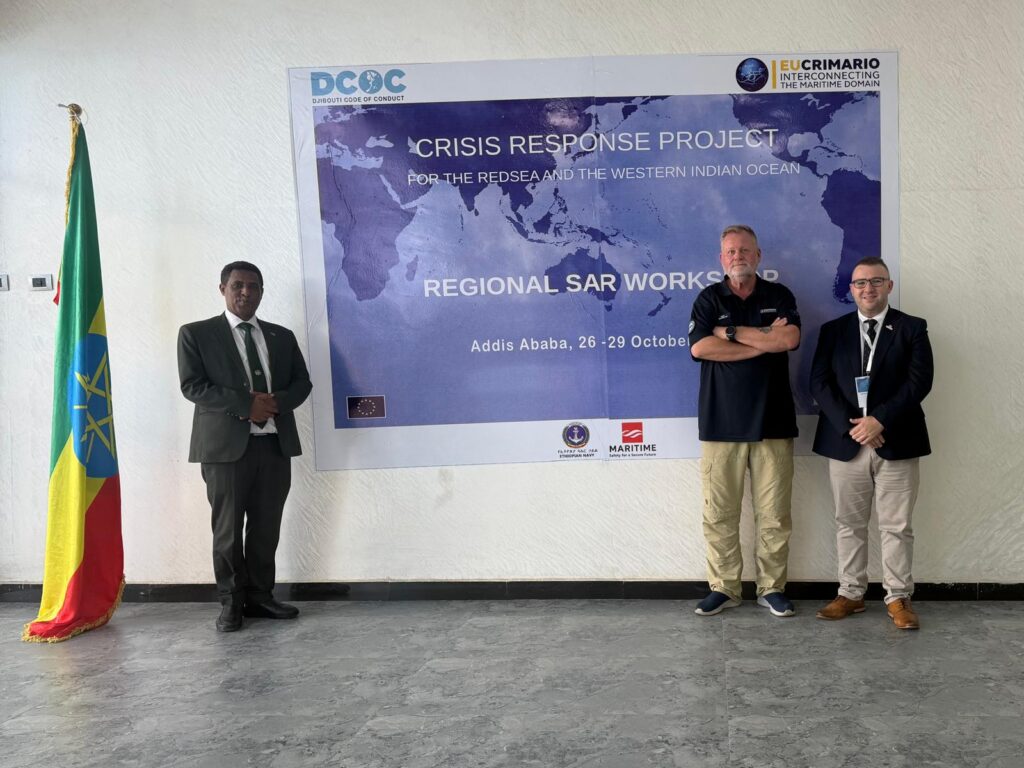
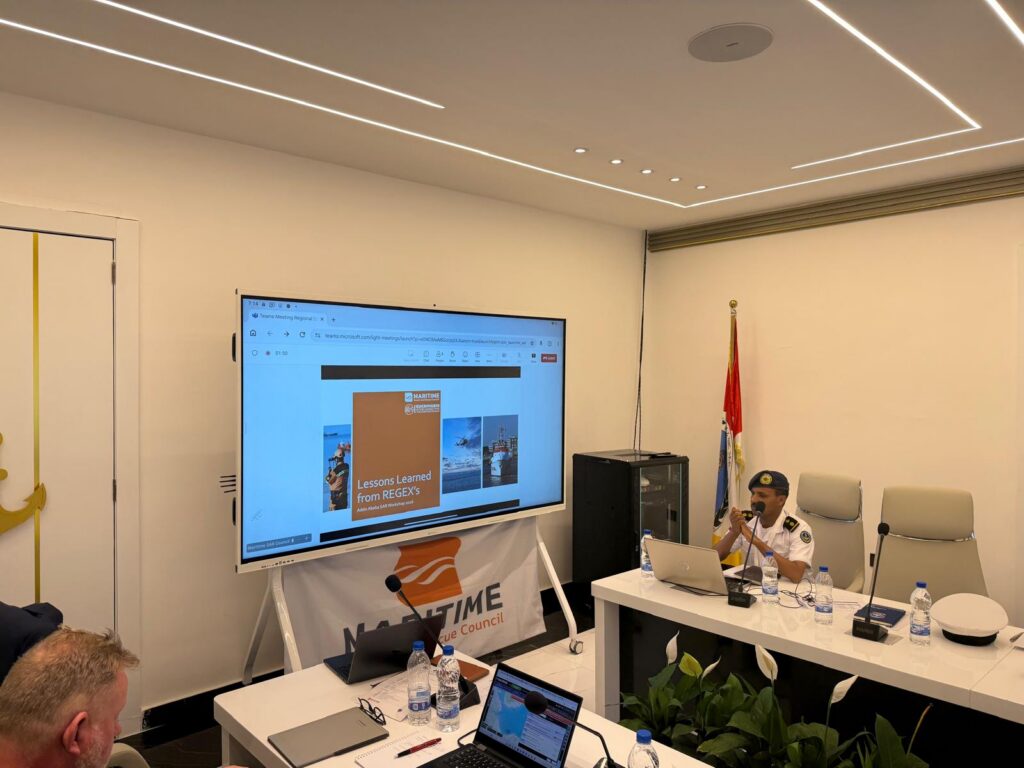
MSARC contributed specialist maritime SAR expertise, with Capt. Matthew Schanck leading sessions on international SAR principles, strategic policy and lessons from recent regional SAR exercises, alongside practical discussions on how these could inform future training and cooperation.
The programme combined technical presentations, facilitated group discussions and a realistic regional exercise. Participants explored the international framework for maritime SAR, the importance of national SAR plans, coordination responsibilities, distress alerting and the effective use of available rescue resources.
Discussions also examined the relationship between maritime jurisdiction and search and rescue responsibilities, helping participants consider how agencies can work together when an incident involves several authorities or requires assistance beyond locally available resources.
Lessons from recent regional exercises provided a starting point for sharing experience and identifying practical priorities. Participants considered how timely information exchange, clear responsibilities and established working relationships can support an effective response when people are in distress at sea.
The workshop provided an opportunity for personnel from different organisations to meet directly, exchange contact details and develop a better understanding of their counterparts’ roles and capabilities.
A central element of the workshop was ADEN SKY 26, a tabletop regional SAR exercise developed around a simulated civilian aircraft emergency and subsequent ditching in the southern Gulf of Aden.
The scenario challenged participants to coordinate a response involving 126 people on board, multiple survivor locations, offers of assistance from vessels and regional agencies, urgent medical needs and deteriorating weather.
Using the IORIS platform, participants shared incident information, positions, resource offers and operational updates. The exercise provided opportunities to practise establishing coordination arrangements, identifying rescue priorities, maintaining a shared incident picture and accounting for survivors.
The exercise was followed by a constructive review of the decisions taken, the approaches that worked well and practical ideas to carry into future training. These included maintaining a clear coordination record, developing a shared SAR action plan and keeping a consistent account of those sighted, recovered or still missing.
Capt. Matthew Schanck, Chairman of the Maritime Search and Rescue Council, said:
“Throughout the workshop, there was a clear commitment to working together to save lives at sea. Bringing regional colleagues together gave us the opportunity to share experience, build relationships and practise how we would coordinate a response to a complex maritime emergency.
I particularly valued the open discussions and the willingness of participants to contribute their knowledge and learn from one another. The exercise helped us turn those discussions into practical decisions about rescue priorities, information sharing and the use of available resources.
We are keen to build on this work alongside EUCRIMARIO and our regional partners through further training and joint exercises, helping to maintain these relationships and support the people carrying out SAR operations across the region.”
Group discussions identified opportunities to develop or strengthen national SAR plans, improve access to practical training and support greater consistency in regional procedures.
Participants highlighted the value of shared contact information, a clearer understanding of available SAR resources, continued use of IORIS and regular opportunities to exercise together.
Further training in SAR planning, coordination and the application of the International Aeronautical and Maritime Search and Rescue Manual was also identified as a useful next step. These discussions will help inform recommendations for follow-on activity and a more detailed assessment of regional training needs.