
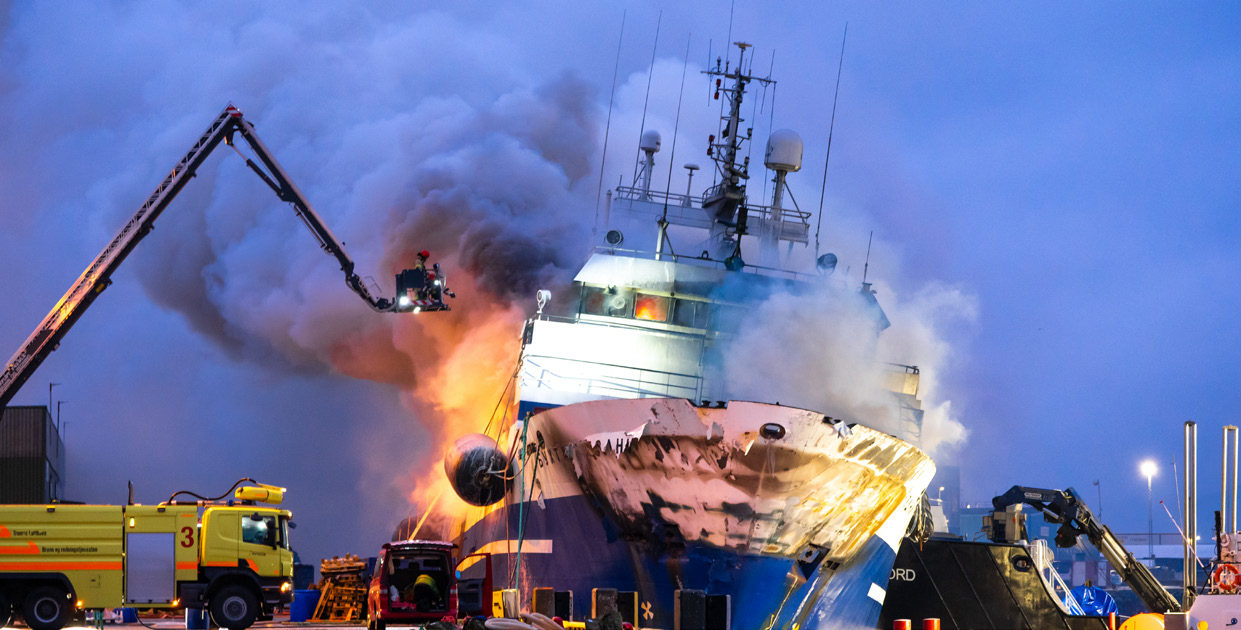
The Maritime Fire Incident Commander Level 2 course is an advanced two-day training program for external incident commanders focused on tactical-level command and control of fire incidents aboard vessels.
Building on foundational knowledge, the course emphasises strategic planning, large-scale incident management, and integration with external emergency services, preparing participants to assist ship captains and shoreside management effectively.
The first day covers advanced firefighting tactics, including offensive and defensive strategies, tactical ventilation, and fireground management, with practical exercises simulating tactical planning and decision-making.
Day two focuses on managing complex operations, such as multi-compartment fires, ensuring crew safety, and maintaining accountability while managing stress and fatigue. Participants learn to conduct dynamic risk assessments, document incidents, and analyse case studies from significant maritime fire events. The course culminates in a full-scale tactical command drill, enabling participants to apply their skills in realistic scenarios.
By the end of the program, graduates will possess the advanced command and control skills needed to oversee maritime fire incidents, ensuring vessel and crew safety while coordinating effectively with shore- based emergency operations.