
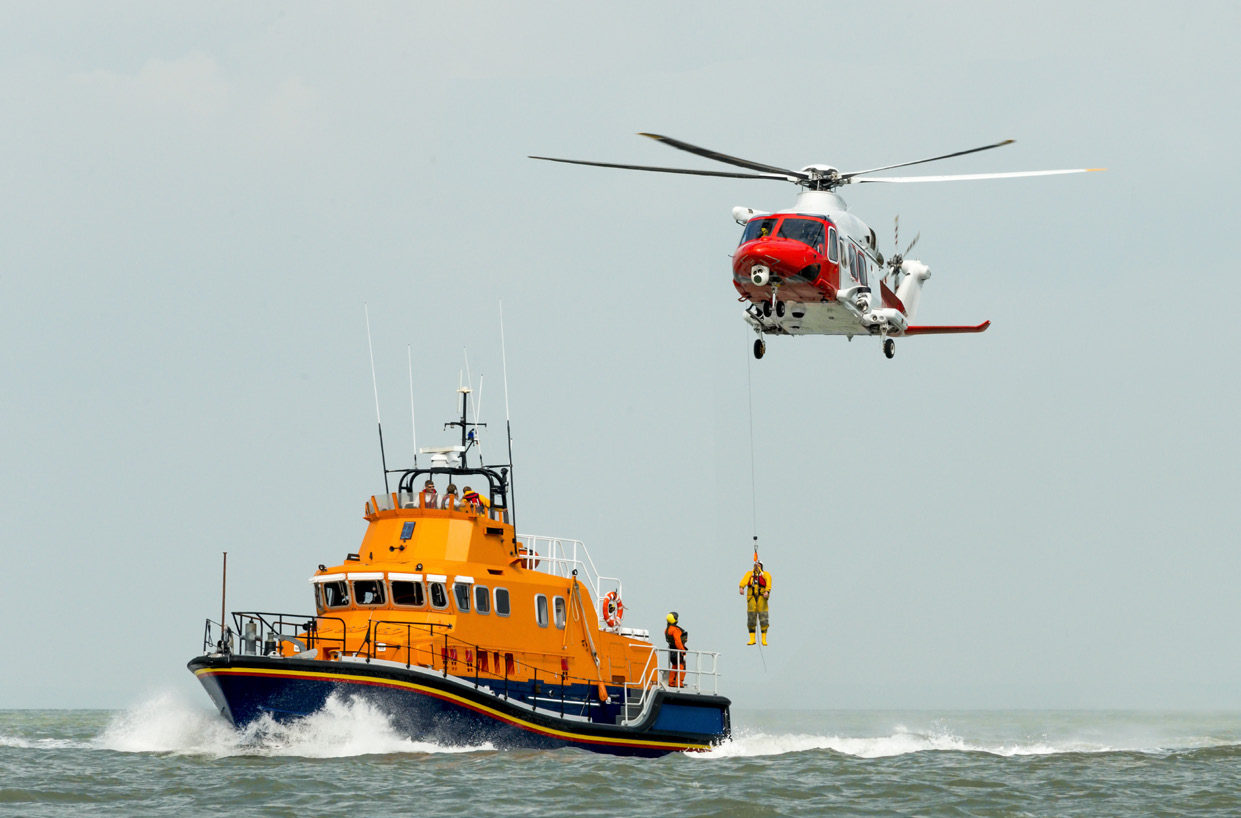
This comprehensive course focuses on the coordination of Search and Rescue (SAR) operations between helicopters and maritime vessels, covering key operational aspects and ensuring participants are prepared for these complex missions.
It begins with an introduction to SAR helicopter operations, emphasising the roles and responsibilities of vessel crews, helicopter signals, communication protocols, and safety procedures when working near helicopters. Participants receive detailed training on the equipment used in helicopter operations and the techniques for transferring personnel and equipment between vessels and helicopters, a critical skill in high-risk scenarios.
A highlight of the course includes a visit to a local SAR helicopter base, offering hands-on exposure to the equipment and helicopters used in their region. As the course progresses, participants explore the command and control elements of joint SAR operations, focusing on leadership, coordination, and the communication protocols needed for seamless collaboration between SAR vessels and helicopters.
The module culminates in simulated joint SAR scenarios, where participants practice coordinating vessel-helicopter operations, solidifying their understanding of command dynamics, communication, and logistics.
The course concludes with an assessment, ensuring participants are equipped with the skills necessary to manage joint SAR missions, contributing to the safety and success of future operations.