
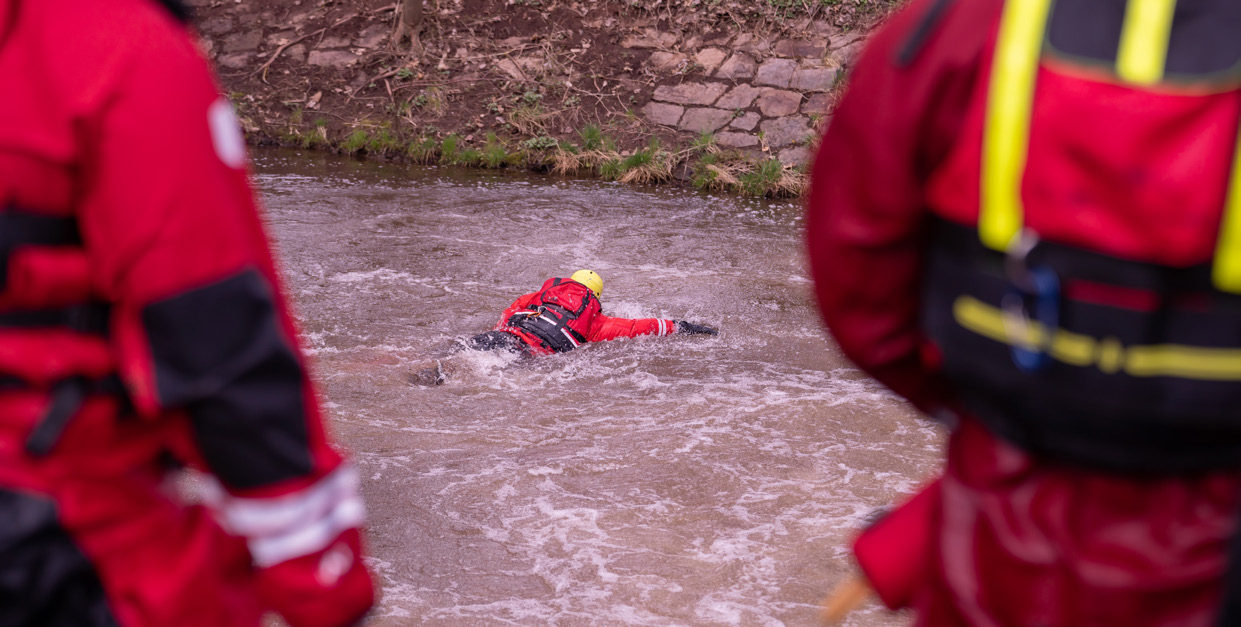
The Coastal Incident and Flood Responder course, aligned with the DEFRA Flood Rescue Concept of Operations Training – Module 3, provides a solid foundation for water rescue professionals, focusing on rescues from shoreside locations or vessels, particularly in moving water environments.
Participants will learn key skills such as reading water conditions, performing non-buoyant rescues, and executing bank-based and tethered rescue swimming. The course emphasises teamwork and prepares rescuers to handle unstable surfaces like mud and ice. The program begins with water rescue scene management, covering dynamic risk assessment, hazard recognition, and the Incident Management Structure, with a focus on team safety.
It then delves into the roles of water and flood rescue technicians, hydrology, and search strategies in water environments, preparing participants to conduct effective rescue operations.
Training also includes thorough instruction on the selection, care, and use of personal protective equipment (PPE), along with practical sessions in swimming, ferry gliding, and mastering rescue techniques such as talk, reach, throw, row, go/tow, and helicopter rescues. Boat handling, paddle and rope systems, knot techniques, and shallow water navigation are covered in detail.
The final stage introduces advanced rescue techniques and equipment, including inflatable adjuncts, rope systems, and managing hazards like entrapment and contamination, as well as working with helicopters and dealing with low visibility.
By the course’s end, participants will have the skills and knowledge to conduct water and flood rescues in even the most challenging scenarios, ensuring the safety and success of their operations.